Analysis · Morocco · Moroccans abroad
Inheriting in Morocco when you live abroad.
The family house in Fez, the parents' flat in Casablanca, a plot near Agadir: one day the question arrives, often at the worst possible moment. What do you do when you inherit in Morocco and live in London, Brussels or Dubai? I am Ahmed Benjas, a Moroccan broker based in Dubai, and this is the method I explain to diaspora families, with the eye of someone who spent twenty years in finance.
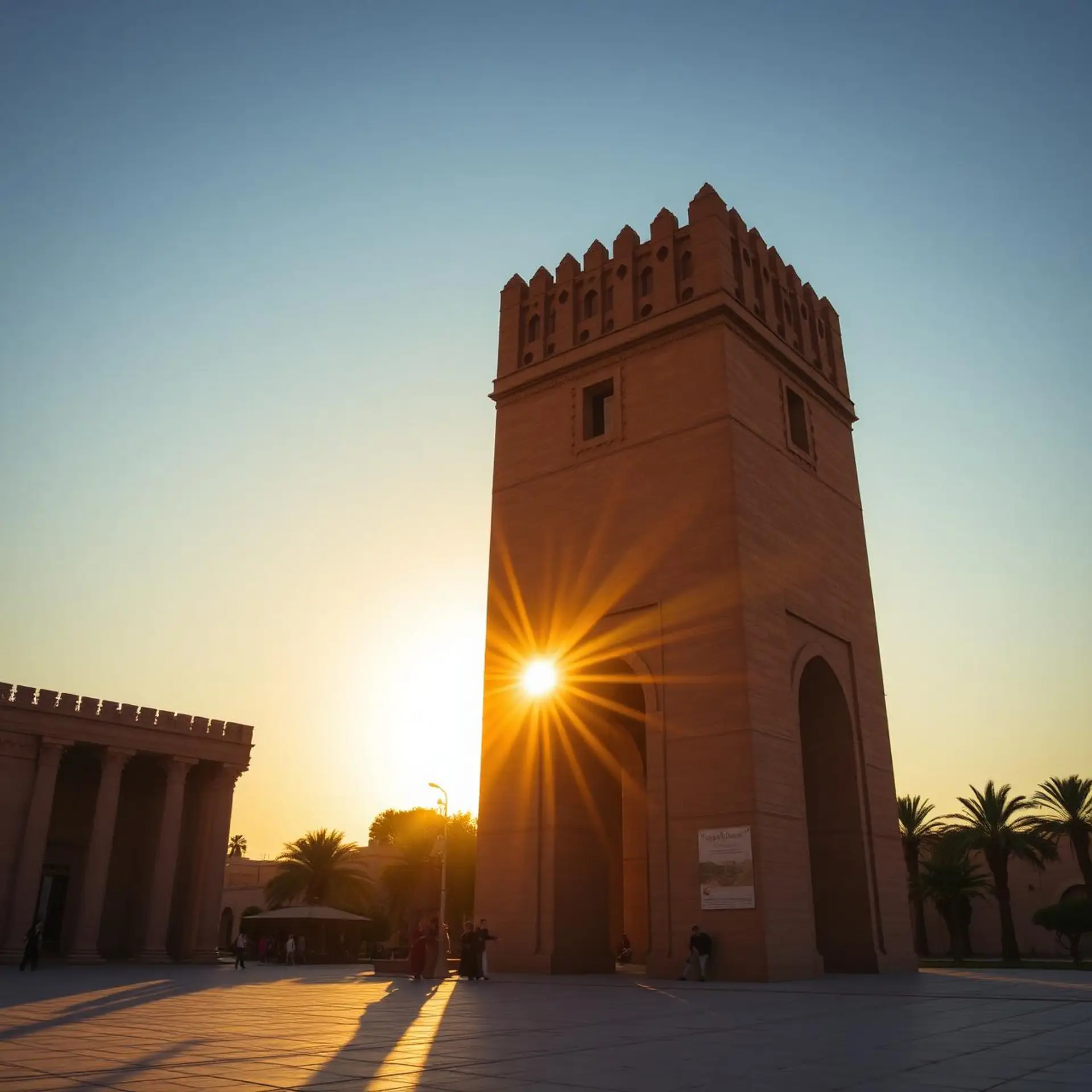
The Hassan Tower in RabatThe short answer
A property in Morocco does not pass into the heirs' names on its own. First you establish who inherits and in what shares, then you register those heirs with the land registry. Until both steps are done, nobody can sell, let the property properly or move the sale price abroad.
- The Moroccan Family Code applies to all Moroccans, including those who hold another nationality (article 2)
- Step 1: the deed of inheritance ("iratha"), drawn up by adouls in Morocco, listing the heirs and their shares
- Step 2: registering the heirs on the land title with the ANCFCC, with the civil status documents
- After that: joint ownership between the heirs, which ends through an agreement, a sale or a partition
- On resale, each heir declares and pays the real estate profit tax on their own share, calculated from the property's value on the date of death
Which law applies to an heir who lives abroad?
For a deceased Moroccan Muslim, it is the Family Code (law 70-03), published on the legal portal of the Moroccan Ministry of Justice. Its article 2 states that it applies "to all Moroccans, even those holding another nationality". Living in France or the UK, or being a dual national, does not in principle change how a property located in Morocco passes on.
The Code also sets the order in which an estate is settled (article 322): first the rights attached to the assets, then the funeral costs, the debts of the deceased, any bequest, and finally the heirs' shares. A will cannot favour one heir without the others' agreement (article 280), and a bequest is limited to one third of the estate (article 301).
If your country of residence has its own rules, the two systems can overlap. For a Franco-Moroccan or British-Moroccan family, a notary or lawyer on each side is worth the fee.
Step 1: the deed of inheritance with the adouls
The deed of inheritance is the document that says who inherits. Adouls draw it up on the basis of the death certificate, the civil status records and witness statements, and it is then approved by the judge in charge of notarial matters. Everything else depends on it.
From abroad, you have two options. Either a relative in Morocco handles it for everyone, or you give a power of attorney to someone you trust, legalised at a Moroccan consulate or drawn up in your country of residence with an apostille. It should cover this estate and this property, never "full powers".
Also have an inventory drawn up after the death: it records the value of the assets on the date of death, and that value will matter on the day of the sale.
Step 2: registering the heirs on the land title
If the property is registered (titre foncier), the transfer by inheritance must then be entered on the title. According to the ANCFCC formalities sheet (in French), the file includes in particular:
- A dated and signed application for registration, with the full names of the heirs
- The deed of inheritance (deed of filiation), with any deeds of bequest
- The death certificate
- A copy of each heir's national identity card or an extract of their birth certificate
- The duplicate of the land title, where there is one
The same sheet lists additional documents when foreign nationals are involved, for example a certificate of custom issued by the embassy or consulate. Land registry fees are due for this registration: ask the registry office, or the professional filing the application, for the exact statement.
If the property is not registered (adoul deeds, "melkia"), have a notary or a lawyer check the chain of ownership before you decide anything.
What does an inheritance cost in Morocco?
Morocco does not levy inheritance tax calculated on the value of the estate, as France or the UK do. The cost comes from the deeds and formalities: the adouls' or notary's fees, registration duties depending on the deeds, and land registry fees. I do not give an overall percentage, because it varies with each file: ask for a written statement at every step. The cost items of a standard purchase are set out in property buying costs in Morocco.
Joint ownership: keep, let or sell?
Once the heirs are registered, the property belongs to all of them, each for their share: this is joint ownership (indivision). Selling or letting in practice requires everyone's agreement, which gets complicated when the heirs live in four countries. Moroccan law sets the principle that nobody can be forced to remain in joint ownership: an heir can ask for a partition, through the courts if needed, but court proceedings are slow and costly.
In practice there are three ways out:
- Keep it together: workable if one heir on the spot manages it, with a written agreement on costs and use. If the property is let, the rent is taxable in Morocco; I explain how in renting out property in Morocco from abroad.
- Buy out the others: one heir buys their brothers' and sisters' shares. For those who sell their share, it is a sale, subject to real estate profit tax. A transfer free of charge between brothers and sisters, or between ascendants and descendants, is however exempt from that tax according to the DGI tax guide. If the family is thinking of a gift rather than a sale, read gifting property in Morocco to your children first.
- Sell to a third party: all the heirs sign, in person or through a power of attorney, and each receives their share of the price.
The tax when the heirs sell
Inheriting does not trigger the real estate profit tax; selling does. For an inherited property, the purchase price used is not the price your parents paid, but the market value of the property on the date of death (article 65 of the Code général des impôts, published by the Direction générale des impôts). Without a documented value, the figure you declare can be challenged.
The DGI tax guide for Moroccans around the world sets out two useful rules. Each joint owner files their own real estate profit return and pays on their share. And each can ask the tax authority for a prior opinion, online, within thirty days of the preliminary sale agreement: the answer comes within sixty days and remains valid for six months.
The rate and the minimum are those of any sale: 20% of the net gain, with a minimum of 3% of the sale price. I detail the calculation and the exemptions in selling property in Morocco as a non-resident.
Worked example: a flat in Rabat, four heirs
Fictitious case. A father dies in 2016. He leaves a widow, two sons and a daughter; two of the children live in France, one in Belgium. The inventory values the flat at 800,000 dirhams on the date of death. The heirs sell it in 2026 for 1,200,000 dirhams. Under the Family Code, the widow receives one eighth when there are children, and the rest is shared between the children, a son's share being twice a daughter's. The revaluation coefficient (1.15) is an assumption for the example: the real one is in the official DGI table. Acquisition costs are ignored.
| Heir | Share | Price received (MAD) | Net gain (MAD) | Tax due (MAD) |
|---|---|---|---|---|
| Widow | 1/8 (12.5%) | 150,000 | 35,000 | 7,000 |
| Son 1 | 7/20 (35%) | 420,000 | 98,000 | 19,600 |
| Son 2 | 7/20 (35%) | 420,000 | 98,000 | 19,600 |
| Daughter | 7/40 (17.5%) | 210,000 | 49,000 | 9,800 |
| Total | 100% | 1,200,000 | 280,000 | 56,000 |
Two lessons. First, without an inventory, if the heirs cannot justify the 800,000 dirhams, the discussion with the tax authority starts from a lower base and the tax goes up. Second, each heir must file their own return: one forgotten return delays everyone's share of the price.
Moving the price abroad
You did not finance an inherited property in foreign currency, so the Office des Changes rule on transferring investments made by Moroccans abroad does not apply as such. When the seller lives abroad, the proceeds in dirhams are in principle paid into a convertible term account, which follows its own transfer rules.
My advice: before signing the preliminary agreement, every heir who lives abroad visits their bank in Morocco with the deed of inheritance, the ownership certificate and the draft sale, and asks in writing what will be transferable, when, and against which documents.
My view as a financier: decide with a cool head
An estate is often settled under emotion, and that is where families lose money. I always ask the same questions: who uses the property, who pays the costs, who wants to keep it, who wants to sell? An empty property deteriorates; joint ownership without rules often ends in court.
Some heirs want to reinvest their share elsewhere, in Morocco or in the Emirates. I compare the two markets without bias in Dubai or Morocco: how to choose, and those looking at available projects in the UAE will find them on investing in Dubai with Cevitas Real Estate, the agency I co-founded. But first: estate settled, title up to date, tax paid, transfer confirmed. And if you own a property in the Emirates, prepare what comes next there too: see succession of a property in Dubai (in French).
The risks to keep in mind
The traps I see most often:
- An estate never entered on the land title: the property stays in the deceased's name, and every new death in the family makes the file harder.
- A power of attorney that is too broad, signed in a hurry and used for other acts than those intended.
- An undocumented value on the date of death, which increases the tax on resale.
- One heir who blocks the sale: a court partition is possible, but slow.
- Tax and exchange rules that change: have every step confirmed by a notary, an adoul or a tax adviser in Morocco, and check your obligations in your country of residence, for example on impots.gouv.fr for France. I am neither a notary nor a tax adviser.
My role
I am a RERA-licensed broker in Dubai (BRN 83239), co-founder & CEO of Cevitas Real Estate (ORN 49294), and I spent more than twenty years in finance before property. For a family inheriting in Morocco, I put the numbers on the table: each heir's tax, the net amount that can be transferred, the reinvestment. The legal work stays with the notary and the adouls. My pages for the diaspora are on property for Moroccans around the world, and the steps of a purchase back home are in buying in Morocco from abroad. Write to me with the deed of inheritance and the ownership certificate: that is where we start.
Your roadmap
Your project, in 60 seconds.
Five questions, and I reply personally with a first reading of your project: where, how, and in what order.
- A personal reply from Ahmed
- A free 30-minute call
- No commitment
Step 1 of 5
Where do you live today?
Official sources
- Moroccan Family Code (law 70-03) · Ministry of Justice legal portal (in French and Arabic)
- ANCFCC · Land registry formalities sheet (in French)
- Direction générale des impôts (DGI, Morocco) · Code général des impôts
- Office des Changes · Transfer of income and sale proceeds of investments by Moroccans abroad (in French)
- Office des Changes (Morocco) · exchange regulations
- impots.gouv.fr · French tax administration
FAQ
Frequently asked questions
Do I have to travel to Morocco to settle an estate?
Not necessarily. A relative in Morocco can have the deed of inheritance drawn up, and you can give a power of attorney legalised at a Moroccan consulate or apostilled in your country of residence. Limit it to this estate and this property.
Which documents are needed to register the heirs on the land title?
According to the ANCFCC: a signed application for registration, the deed of inheritance, any deeds of bequest, the death certificate, an identity document or birth certificate extract for each heir and the duplicate of the title where there is one.
Is there inheritance tax in Morocco?
There is no inheritance tax calculated on the value of the estate, as in France or the UK. You do pay deed fees, registration duties depending on the deeds, and land registry fees for the registration of the heirs.
Can one heir sell their share without the others?
They can transfer their undivided share, but selling the whole property to a third party requires the agreement of all the heirs. An heir who wants to leave the joint ownership can also ask for a partition, through the courts if needed.
Which purchase price counts for tax when selling an inherited property?
The market value of the property on the date of death, under article 65 of the Code général des impôts, not the price paid by the deceased. An inventory drawn up after the death helps justify that value.
What if the inherited property has no land title?
Then ownership rests on adoul deeds (melkia) rather than a registered title. Have a notary or a lawyer check the chain of ownership before any decision: a buyer, and the bank, will ask for the same checks.
Read next
Contact
Let's talk about your project.
One message is enough. I reply personally, in English, French, Arabic or Darija.