Guide · Dubai
Investing in Dubai as a Moroccan, wherever you live.
Whether you live in Rabat, Manchester, Toronto or Riyadh, buying in Dubai follows the same official framework. What changes is where your money comes from and the rules that apply to it. Here is how I walk my Moroccan clients through it.
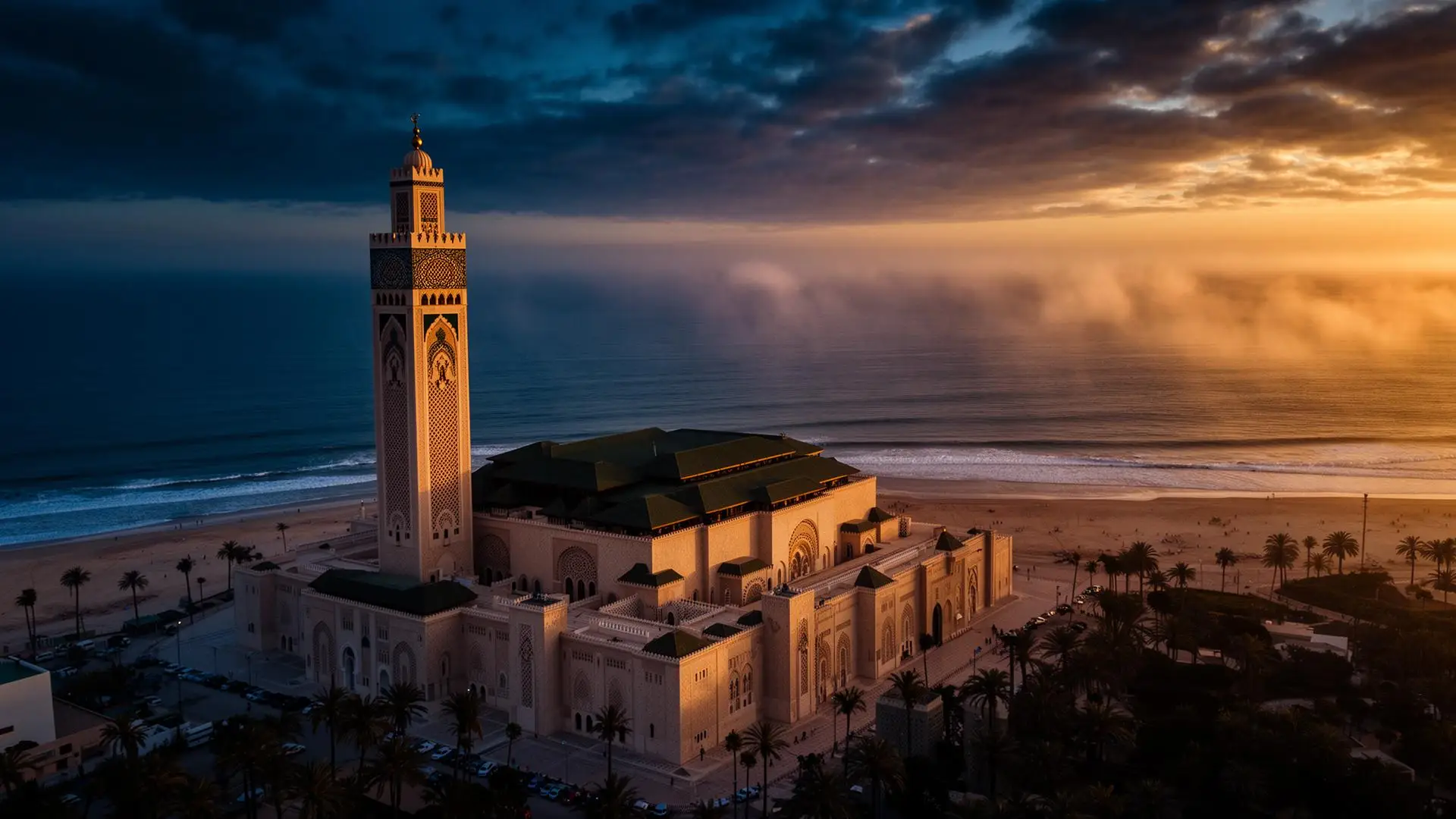
La mosquée Hassan II à CasablancaYes, Moroccans can own property in Dubai
This is the first question I am asked, and the answer is simple. Foreign nationals, Moroccans included, can buy freehold property in Dubai's designated freehold areas. Freehold means full ownership: the apartment or villa is yours, with no time limit, and you can sell it, rent it out or pass it on.
The legal basis is Law No. 7 of 2006 on Real Property Registration, and the freehold zones are set by Dubai regulation. Your ownership is recorded at the Dubai Land Department, which issues the title deed in your name. Nationality is not the criterion; the area is. You do not need a UAE residence visa, a local company or a local partner to buy.
In practice, most of the communities that international buyers look at, from the waterfront districts to the newer family neighbourhoods, sit within freehold areas. If you want a sense of the options, my overview of Dubai neighbourhoods by investment goal is a good starting point.
Two profiles, one market
Moroccans who buy in Dubai tend to fall into two groups, and it is worth knowing which one you belong to, because it shapes everything that follows.
The first group lives in Morocco. For them, the key point is that residents of Morocco who want to invest abroad are subject to the exchange-control rules of the Office des Changes. Those rules must be checked, and respected, before a single dirham leaves the country. I never move to a reservation with a Morocco-resident client until this question has a clear answer.
The second group is the diaspora: Moroccans living in the UK, Canada, the US, the Gulf or elsewhere in Europe. They usually pay from a bank account in their country of residence, in pounds, Canadian dollars, euros or Gulf currencies, and the Moroccan exchange-control question does not arise in the same way. Their own points to check are their bank's transfer procedures and the tax rules of the country where they live. My page for Moroccans abroad covers this profile in more detail.
Buying without getting on a plane
A Dubai purchase can be completed entirely from abroad. Reservation forms, sale and purchase agreements and registrations are largely handled digitally, and identity checks are done on your passport. Many of my clients visit once for the pleasure of seeing the city, but it is not a requirement.
Time zones are easier to manage than people expect. Dubai is three hours ahead of Morocco for most of the year, four hours ahead of London in winter, eight or nine hours ahead of Toronto and Montreal, and one hour ahead of Doha and Riyadh. A video call at the end of a Canadian working day lands at the start of the next Dubai morning, which works well for document reviews.
For the step-by-step mechanics of signing and paying at a distance, see my guide to buying in Dubai remotely.
Off-plan or ready: two different routes
Off-plan means buying a property before or during construction, directly from the developer, with payments spread over the build. Under Law No. 8 of 2007, buyers' payments go into the project's escrow account and are released to the developer according to construction progress, under RERA oversight. Your purchase is recorded in the interim register, Oqood.
Ready property, whether new or resale, gives you immediate keys: you can live in it or rent it out straight away. The purchase is settled in one go (or with financing), and the transfer takes place at a Dubai Land Department trustee office.
Neither route is better in absolute terms. Off-plan suits people who want to spread their payments and are comfortable waiting for handover; ready suits those who want use or rental from day one. I explain the off-plan framework in depth in buying off-plan in Dubai.
The money side, calmly
Payments for off-plan purchases go to the project's escrow account, never to an individual. For a resale, funds are handled through the transfer process at the trustee office. In every case, you should be able to trace each payment to an official destination and keep the receipt.
The UAE dirham is pegged to the US dollar at 3.6725 AED per USD, set by the Central Bank of the UAE. If you earn in dollars or a Gulf currency, that makes budgeting very predictable; if you earn in pounds, euros or Canadian dollars, your cost in your own currency will move with exchange rates, which is worth planning for.
At purchase, the Dubai Land Department transfer fee is 4% of the price, plus administrative and registration fees. My guide to Dubai purchase costs sets them out, and paying for a Dubai property from abroad covers transfers in detail.
The steps, from first call to title deed
Every file is different, but the sequence is consistent. This is the order I follow with clients wherever they live.
- Clarify your goal: rental income, a future home, a Golden Visa, or a mix
- Residents of Morocco: check the Office des Changes rules before anything else
- Shortlist areas and projects that match the goal and budget
- Verify the developer and project registration with the DLD and RERA
- Reserve, sign the sale and purchase agreement, and pay to the escrow account or through the official transfer process
- Registration in Oqood (off-plan) or transfer of the title deed (ready)
- Handover, snagging inspection, then letting or moving in
Owning from abroad, day to day
Once the keys are handed over, most owners abroad delegate. A licensed property management company can find tenants, register the lease through Ejari, collect rent and handle maintenance, while you follow everything through statements and photos. Short-term holiday letting is also possible, with a holiday home permit from Dubai's Department of Economy and Tourism (DET).
Owners also pay annual service charges for the building's common areas. In Dubai they are approved by RERA and published in the RERA Service Charge Index, which makes them easy to check before buying. And because the UAE levies no personal income tax, the question to settle is how your country of residence treats rental income; a tax adviser there validates your situation. My guides to renting out your Dubai property and tax for Moroccans abroad go further.
Many of my clients also keep an interest in Morocco, whether a family home or a new-build project. Dubai and Morocco are not competing choices; they often sit side by side in the same family plan. If that is your case, my comparison of Dubai or Morocco may help you weigh them.
Let's look at your situation together
Every Moroccan investor I work with starts from a different place: a salary in London, a business in Casablanca, savings in Canada, a contract in the Gulf. The framework in Dubai is the same for all; the right plan is not.
I am Ahmed Benjas, born in Morocco, with more than twenty years in finance before real estate, and founder of Cevitas Real Estate, a RERA-licensed brokerage in Dubai. Book a free 30-minute call and we will map out your route, in Darija, French, Arabic or English. You can also see how I work on the services page.
Your roadmap
Your project, in 60 seconds.
Five questions, and I reply personally with a first reading of your project: where, how, and in what order.
- A personal reply from Ahmed
- A free 30-minute call
- No commitment
Step 1 of 5
Where do you live today?
FAQ
Frequently asked questions
Can a Moroccan citizen buy property in Dubai?
Yes. Foreign nationals, including Moroccans, can buy freehold property in Dubai's designated freehold areas under Law No. 7 of 2006. The title deed is issued in your name by the Dubai Land Department. You do not need a UAE residence visa to buy.
I live in Morocco. What should I check before investing in Dubai?
Residents of Morocco who invest abroad are subject to the exchange-control rules of the Office des Changes. Check those rules, ideally with your bank or an adviser, before any transfer or commitment. Only then should you move to a reservation.
Do I need to travel to Dubai to buy?
No. Reservations, contracts and registrations can be completed remotely, with identity checks on your passport. Many buyers visit once out of interest, but the purchase does not require it.
Can I pay from my bank account in the UK or Canada?
Yes, Moroccans abroad usually pay from their account in their country of residence. For off-plan purchases, payments go to the project's escrow account, never to a personal account, and you should keep every receipt.
Read next
Contact
Let's talk about your project.
One message is enough. I reply personally, in English, French, Arabic or Darija.